

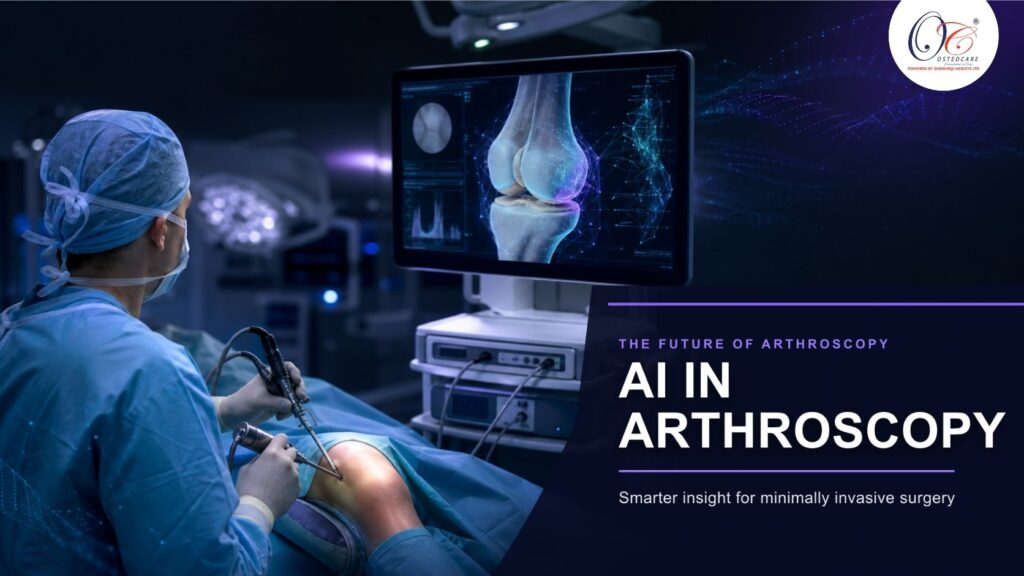
Arthroscopy has revolutionized orthopaedic surgery, offering minimally invasive access for diagnosis and treatment. Yet, even with its advancements, the procedure hinges on a surgeon’s skill and visual interpretation. Now, Artificial intelligence (AI) stands ready to elevate arthroscopy, promising a new era of precision. By leveraging machine learning and advanced image analysis, AI aims to augment human capabilities, enhance diagnostic accuracy, and refine surgical techniques. This integration can mark a paradigm shift, blending the art of surgery with the precision of AI, ultimately driving improved patient outcomes and a more refined standard of orthopaedic care. The Current Landscape and Challenges:
Current arthroscopy relies on real-time visual interpretation of the joint’s anatomy by the surgeon. This process can be subjective and prone to variability, depending on the surgeon’s experience and knowledge. Challenges include:
- Subjective Interpretation: Recognizing subtle pathologies within the joint can be challenging, even for experienced surgeons.
- Limited Visualization: While arthroscopy provides excellent internal views, certain areas may be difficult to access or visualize comprehensively.
- Manual Instrument Control: Precise manipulation of instruments within the confined joint space requires significant dexterity and experience.
- Data Overload: Surgeon’s process vast amounts of visual information during the procedure, potentially leading to cognitive overload.
For instance, in Anterior Cruciate Ligament Reconstruction (ACLR), technical errors are a significant cause of failure, ranking as the second most common reason. Specifically, femoral (29%) and tibial (11%) tunnel malposition are predominant factors. This highlights the critical need for increased precision in arthroscopic procedures. AI’s Role in Enhancing Arthroscopy:
AI offers a range of solutions to address these challenges, transforming arthroscopy in several key areas:

- Enhanced Image Analysis:
- AI algorithms, particularly deep learning models, can analyse arthroscopic images and videos in real-time, identifying subtle pathologies and abnormalities that may be missed by the human eye.
- AI can provide automated annotation and segmentation of anatomical structures, assisting surgeons in accurate diagnosis and treatment planning.
- AI can quantify the severity of joint damage, providing objective measures for assessing treatment effectiveness.
- Surgical Navigation and Guidance:
- AI-powered navigation systems can overlay virtual anatomical models onto the real-time arthroscopic view, providing surgeons with a more comprehensive understanding of the joint’s anatomy.
- AI can guide instrument placement and movement, ensuring precise and accurate surgical interventions.
- Robotic-assisted arthroscopy, driven by AI, can enhance surgical precision and minimize human error.
- Predictive Analytics and Personalized Medicine:
- AI can analyse patient data, including medical history, imaging studies, and genetic information, to predict the likelihood of specific pathologies and tailor treatment plans accordingly.
- AI can analyse surgical outcomes to identify factors that contribute to successful procedures, leading to improved surgical techniques and patient care.
- Training and Education:
- AI-powered simulation platforms can provide realistic training environments for surgeons, allowing them to practice complex arthroscopic procedures in a safe and controlled setting.
- AI can provide personalized feedback and guidance to trainees, accelerating their learning curve.
The Future of AI in Arthroscopy: A Revolution on the Horizon:
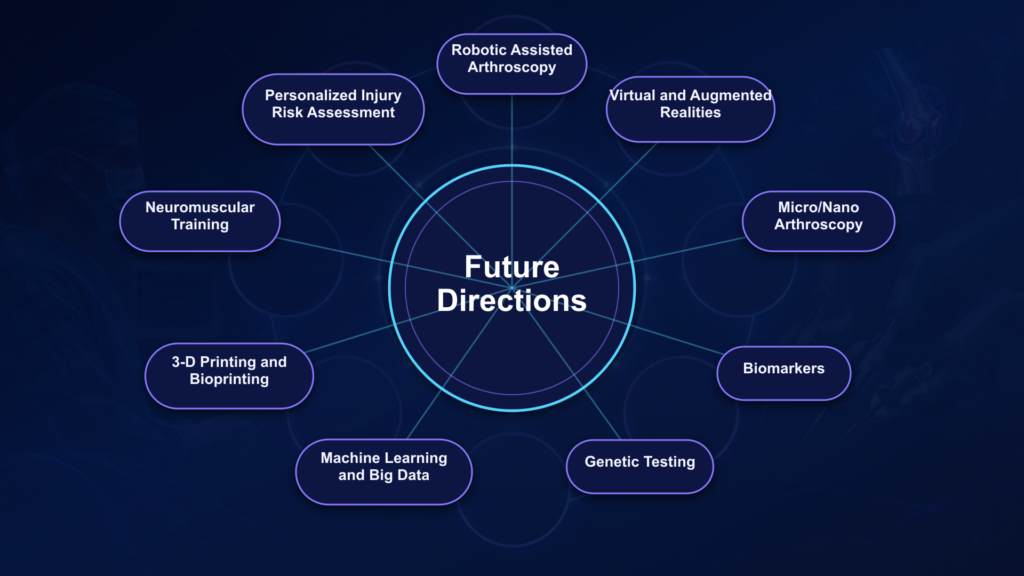
The future of AI in arthroscopy is poised to revolutionize the field, with the global healthcare AI market projected to expand significantly from $14.6 billion in 2023 to $102.7 billion by 2028. This reflects a compound annual growth rate of 47.6%. This expansion will drive advancements in imaging, predictive planning, and the integration of AR and robotics, leading to enhanced surgical precision and personalized care. In conclusion, the prospects of AI in arthroscopy are bright, heralding a future where minimally invasive surgical procedures are safer, more effective, and more personalized than ever before.